


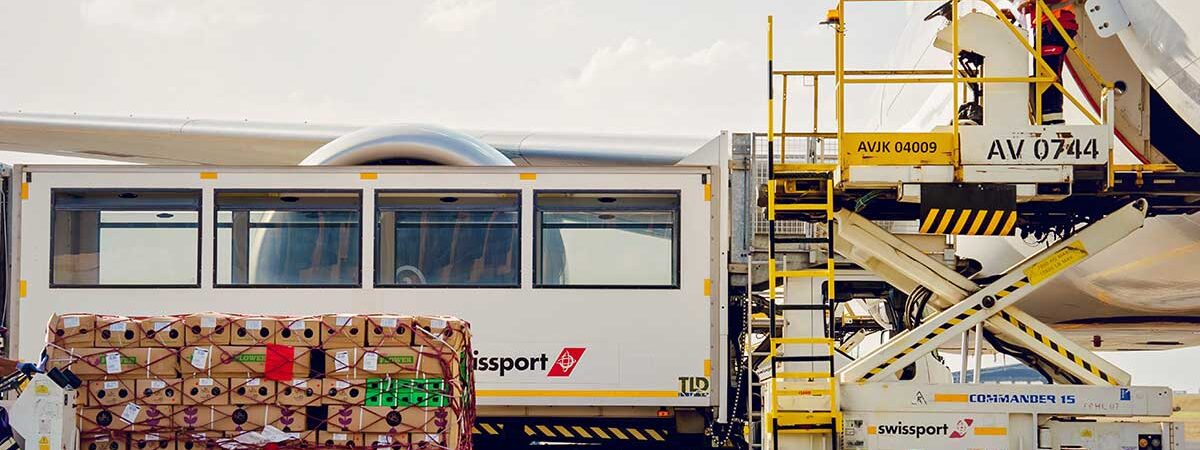
Air cargo continues to be a challenging market
Dirk Goovaerts, Head of Continental Europe, Middle East & Africa / Global Cargo Chair, Swissport International
The volume decline trend that began in 2022 continues to be the main challenge for the air cargo industry, primarily since only a year earlier, in 2021, many, including Swissport, handled a record number of cargo tons.

Armed conflict in Ukraine, ongoing recession, reduced demand for manufactured and consumable goods, and the limited need for COVID-related products, such as testing and protection kits, PPE, vaccines, and other pharmaceuticals, are the main contributors to softer cargo volumes.
In addition, with the abolition of travel limitations caused by the pandemic, airlines have restored passenger flights, and with them, they have increased belly capacity. Such a situation creates more pressure and competitiveness on the air cargo market as the carriers look to fill capacity.
The post-pandemic comeback of ocean freight availability and reliability also contributes to lower demand for air cargo. The competitive prices balance out longer delivery times, making ocean freight an important challenger to the air cargo industry.
Whilst the market continues to be uncertain, Swissport concentrates on opportunities created by adverse conditions and early mitigation. We pursue the drive to digitalization to improve processes and maximize efficiency. Swissport launched the Cargo mobile app and provided cargo teams with handheld mobile devices that eliminate manual data input and, thus, human error. Implementation of cargo kiosks led to reduced wait times for the delivery truck drivers thanks to efficient scheduling and door management, creating substantial cost savings for freight forwarders. In the US, we launched the Security Portal – a tool that digitizes cargo security acceptance and screening process and ensures compliance with the applicable TSA regulations.
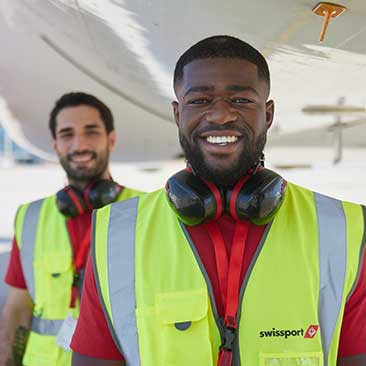
Investments in innovation are essential to maintain the position of an air cargo industry leader, despite market fluctuations. In addition, they are necessary to build safe and comfortable working conditions and attract new talents – elements required to be an employer and partner of choice.
At Swissport, however, we understand innovation in the broader context. Therefore, apart from digitalized solutions, the company pushes for implementing innovative processes, products, and services. Thanks to the cargo communities established by Swissport in several locations worldwide, air cargo stakeholders can work together on futureproof, joint initiatives that can be implemented along the entire supply chain to benefit all parties and, most importantly – the end customer.
An example of such an initiative is a Fresh Flower Corridor launched by Swissport between Nairobi in Kenya and several European countries. This door-to-door solution allows us to extend the shelf life of the product, and master the packing and packaging techniques, adding value for all involved, from growers to airlines and fresh flowers distributors, all because of the united approach and close cooperation avoiding any temperature fluctuation along the entire supply chain.
Some countries in Africa experience growth in volumes of perishable products. For example, our teams in Tanzania have been handling record tonnages of meat exported mainly to the Middle East.
Despite currently adverse market conditions, Swissport remains very optimistic about the future of air cargo. The company anticipated market trends early and was able to build the right commercial and operational momentum. We see the current environment as an excellent opportunity to demonstrate our ability to right-size our business and adapt to the changing needs of our partners and clients. It is our mission to continue delivering excellent services tailored to these needs – by focusing on innovation, cross-fertilization throughout our global network, and continuous growth.
In 2022, Swissport International AG provided best-in-class airport ground services for some 186 million airline passengers (2021: 97 million) and handled roughly 4.8 million tons of air freight (2021: 5.1 million) at 117 air cargo centers worldwide. Several of its warehouses have been certified for pharmaceutical logistics by IATA’s CEIV Pharma and by the British MHRA. The world’s leader in airport ground services and air cargo handling, with currently around 50,000 employees, was active at 292 airports in 45 countries on six continents.


