A Higher Level of Upset Training with APS
Loss of control in flight (LOC-I) incidents have resulted in more fatalities than any other kind of aviation accident for many years. The threat exists on any flight, at any moment, and pilots may only have a little window of opportunity to make the correct flight control inputs in order to safely recover from an aircraft upset.
A LOC-I event occurs when a pilot is unable to recover from an unintentionally extreme deviation from the intended flightpath due to a lack of skill, altitude, or time. This can result in a serious incident or fatal crash. Many inflight upset events—including those with a perfectly good aircraft—can quickly escalate into a LOC-I event when they are improperly managed. Early detection and upset prevention, together with specialized training to address skill, are necessary for effective LOC-I intervention.
Current upset prevention and recovery training (UPRT) programs, which are restricted to the use of flight simulation training devices (FSTDs), may not be meeting the needs of the LOC-I, according to recent LOC-I instances. As stated by Paul “BJ” Ransbury, CEO of Aviation Performance Solutions, “Advanced flight simulators, while effective at addressing some of the needed UPRT experience, knowledge areas, and competencies, cannot robustly replicate the psychophysiological effects such as the startle factor to a sufficient level of fidelity to reliably prepare pilots for the severity of potential impairment of the pilot and crews’ faculties in a real-world upset event.”
In the U.S., airline pilots were first required to enroll in UPRT training in March 2019. An FSTD approved for extended envelope training (EET) is used in these programs.
In addition to offering advice to operators setting up UPRT programs, FAA AC 120-111 Upset Prevention and Recovery teaching issues some warnings to instructors using FSTDs as a teaching tool. Instructors must be aware that FSTDs are restricted to the parameters that have been coded and assessed, according to the text. When operating outside of these limits, the FSTD may react to a pilot’s control inputs differently than the aircraft.
Similar to motion cueing information, a realistic simulation of the accompanying forces and rates that might be sensed within the aircraft is not always possible. Therefore, because to the constraints of an FSTD, it is impossible to demonstrate flying in an all-attitude environment (both physiologically and aerodynamically) and there is no way to give the learner adequate G-awareness training.
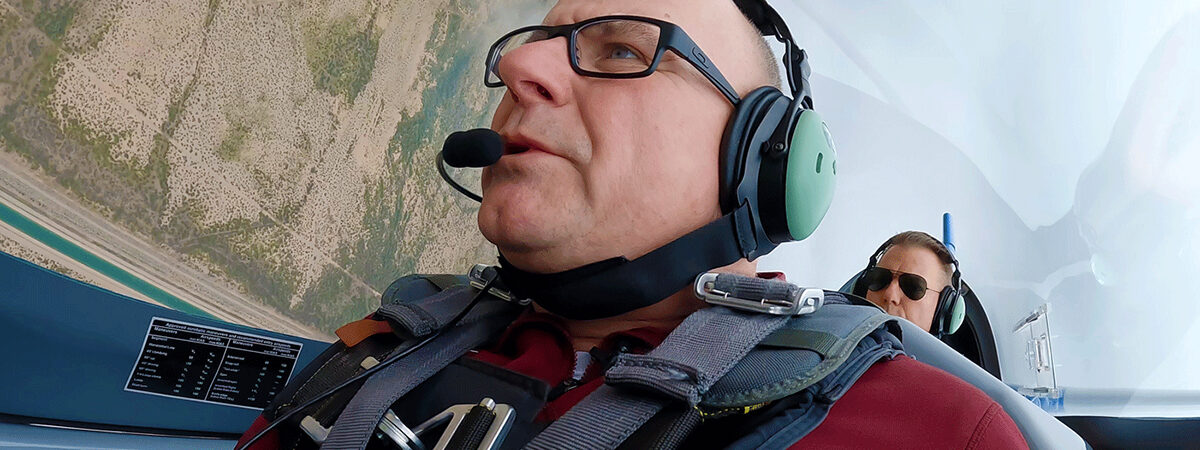
One of the biggest issues with existing “simulator-only” UPRT programs is the lack of G-awareness training and precise motion cueing paired with physiological conditions resembling a real-world upset while being exposed to all-attitude flying profiles. Only “on-aircraft” in all-attitude capable aircraft under the supervision of an instructor with specialist training in the delivery of UPRT can these areas be efficiently and securely completed.
The Mesa, Arizona-based UPRT expert Aviation Performance Solutions (APS) has created a comprehensive approach to achieve peak UPRT efficacy that is specific to a pilot’s or business’s operating profile. Once put into practice, this system offers a long-term “life plan” with UPRT training that is both initial and ongoing.
The “Every Pilot in Control Solution Standard” or EPIC-S2 is the central component of the APS UPRT program and is a comprehensive framework built on tested techniques to support and significantly enhance efforts to overcome LOC-I accidents. This approach is based on tried-and-true principles discovered during the previous 27 years of directly training more than 20,000 pilots and more than 30,000 pilots annually by APS-certified UPRT instructors at air carriers, flying schools, and training facilities all over the world. Six crucial components make up the integrated EPIC-S2 model: instructor qualifications (the elite, highly qualified instructor), an integrated program (academic, on-aircraft, and advanced simulation), training program duration for the required intensity, industry compliance with best practices, and the appropriate use of training platforms and other elements like initial and ongoing training.