Environmental Groups Increase Pressure on Bizav in Europe
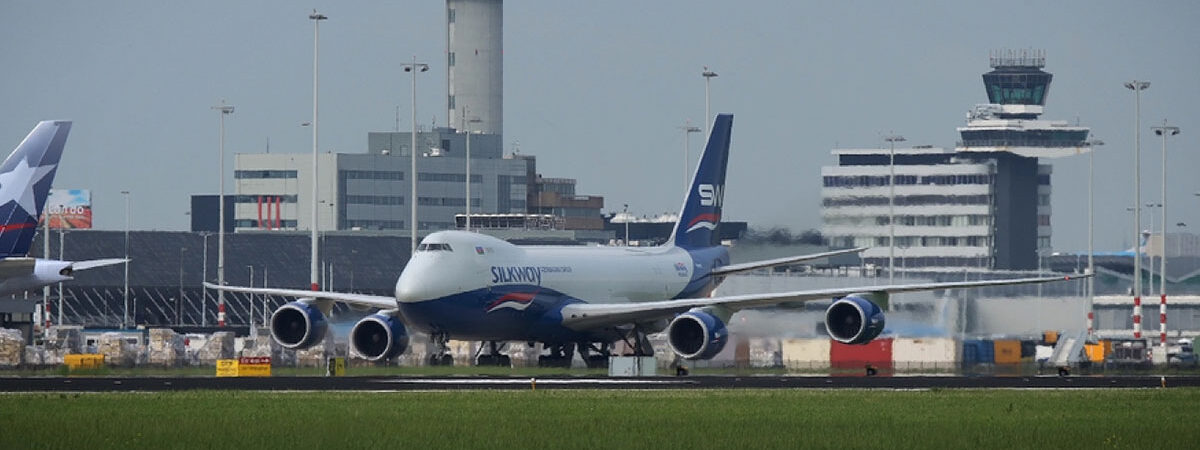
Amsterdam Schiphol Airport said early last month that it intends to exclude private jets and small business aircraft from using its facility starting in 2025, a move that has shocked the sector. The choice highlights how the European Green Deal and the drive for climate neutrality are influencing public opinion and policy throughout the area.
One of Europe’s largest airports made a decision to eliminate a portion of its operations that is seen as controversial from an environmental and social standpoint; this action could be emulated by other airports.
“This decision is not representative of the wider aviation industry’s position on business aviation,” the European Business Aviation Association (EBAA) stressed. The group acknowledged, however, that Schiphol’s determination to bar business aviation flights is a “significant blow” that has caused concern among industry leaders.
“The Amsterdam Schiphol decision to ban business traffic reflects a very specific and complex set of local circumstances and must not set a precedent for the entire aviation sector,” commented Olivier Jankovec, director general of the Brussels-based airport trade body Airports Council International Europe. “Business aviation is vital for many airports and their communities across Europe. This is particularly true of regional airports, where it provides connectivity not otherwise available. Along with all aviation industry stakeholders, business aviation has as its absolute priority CO2 emission reduction and net-zero by 2050. And it’s likely to be the first segment of the aviation industry to achieve it,” he told.
Amsterdam Schiphol Airport said early last month that it intends to exclude private jets and small business aircraft from using its facility starting in 2025, a move that has shocked the sector. The choice highlights how the European Green Deal and the drive for climate neutrality are influencing public opinion and policy throughout the area.
One of Europe’s largest airports made a decision to eliminate a portion of its operations that is seen as controversial from an environmental and social standpoint; this action could be emulated by other airports.
The first week of the UN climate change conference COP27 in Egypt in November drew similar protests by activists calling for the “ban of private jets, taxation of frequent flyers, and making polluters pay” in front of Dassault Aviation’s headquarters in Paris and at FBOs in the UK, Italy, and Germany. There were protests against using private planes during the January World Economic Forum in Davos, Switzerland.
The proposed ban on business aircraft at Schiphol is not yet finalized. Civil airports have a public charter, and its operator is not permitted to prohibit customers without a good cause, claims Mark Harbers, the Netherlands’ minister of infrastructure and water management. “There is no legal basis for restricting or denying private jets and business aviation aircraft access to an airport for sustainability reasons, or for including provisions on this in an airport decree,” he wrote in a letter to the country’s House of Representatives.
Harbers asserted that despite the higher emissions per passenger in a private jet or business aviation compared to passengers on a standard commercial flight, there is still much to be achieved. He said that in order to do this, his department is looking into the possibility of the Netherlands imposing a mandate for sustainable aviation fuel (SAF) blending for private planes and business aviation that is higher than what is suggested in the ReFuelEU Aviation framework for the entire EU.
In reality, the EBAA has been urging the co-legislators of the EU “to make SAF more accessible in the shortest feasible time frame, considering the special characteristics of the business aviation sector,” according to EBAA senior communications manager Róman Kok.
Many of our operations are conducted in small airports not connected by airlines, which is a key added value of business aviation. Thus, to reduce emissions within our sector, in accordance with our Business Aviation Commitment on Climate Change, it is crucial that small airports are also required to carry SAF,” he told. “Should SAF not be physically available on site, EBAA supports a book-and-claim system.”
According to the Brussels-based clean mobility NGO, Transport & Environment (T&E), a ticket and fuel tax should be imposed on fossil-fueled private jets, scaled with flight distance and aircraft weight, to account for their “disproportionate climate impact.” The taxes should remain in place till 2030, by which time regulators should permit only the use of aircraft powered with green hydrogen and electricity for private jet flights under 1,000 kilometers within Europe